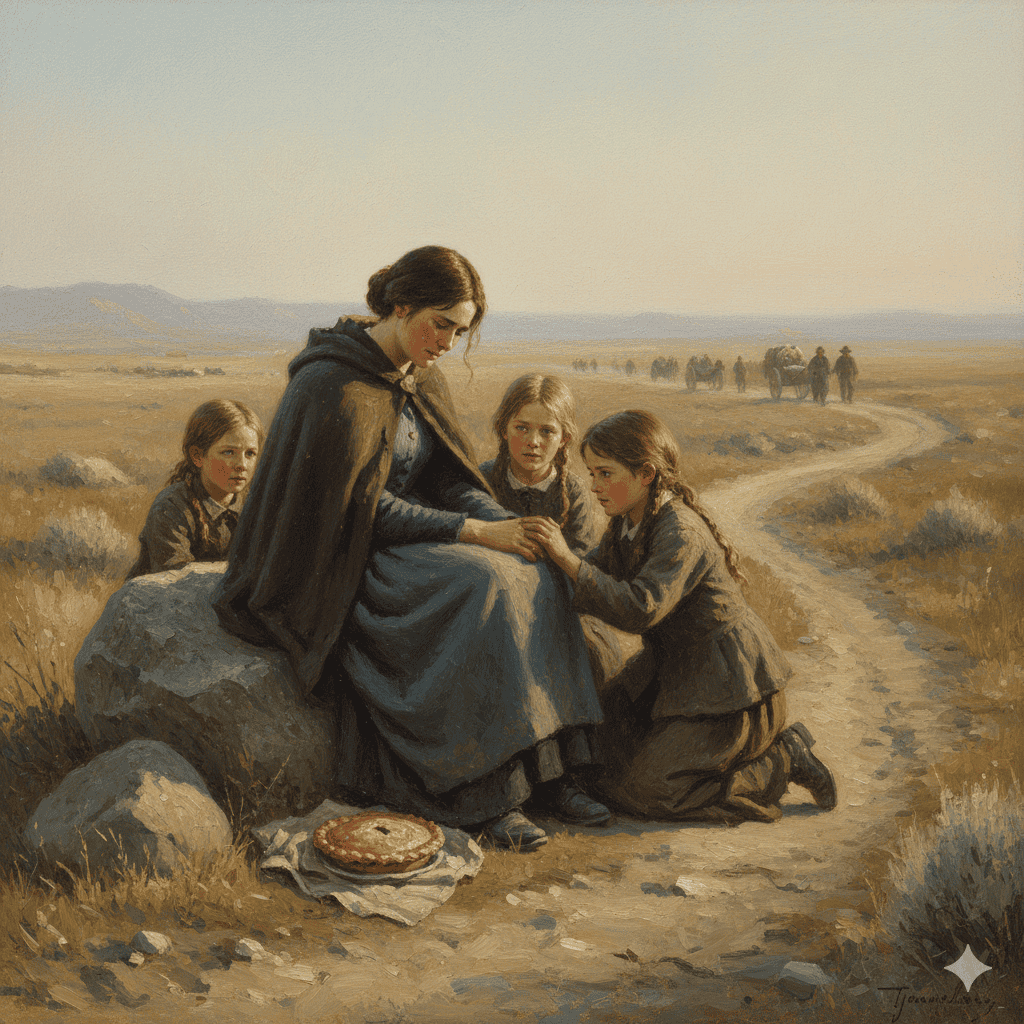
— The Measure of the Climb —
Success is to be measured not so much by the position that one has reached in life as by the obstacles which one has overcome.
Booker T. Washington
About the Author
Booker Taliaferro Washington (1856–1915) was born into slavery on a small tobacco farm in Franklin County, Virginia. He did not know the day of his own birth, and he never knew his father. As a boy he slept on a dirt floor and was sent before dawn to carry sacks of grain to the mill, beaten if he was late. When emancipation came at the end of the Civil War, he was about nine years old, and he went to work in the salt furnaces and coal mines of West Virginia — rising at four in the morning to labor, then walking to a makeshift schoolhouse afterward, desperate to learn to read. Hearing of a school for Black students hundreds of miles away — the Hampton Institute — he set out for it with almost nothing in his pockets, traveling the last stretch on foot and sleeping under a wooden sidewalk. When he arrived, exhausted and filthy, the head teacher tested him by asking him to sweep a room. He swept it three times and dusted it four; she ran a handkerchief over the woodwork and found not a particle of dust. “I guess you will do,” she said. That swept room was his entrance examination. In 1881 he founded the Tuskegee Institute in Alabama, beginning with a leaky shanty and a handful of students, and built it over decades into one of the most respected schools in the nation. His autobiography, Up from Slavery, remains an American classic.
Historical Context
This line comes from Up from Slavery (1901), written when Washington was the most prominent Black leader in America. The sentence is not abstract philosophy — it is autobiography compressed into a single thought. Here was a man who had begun life owning nothing, not even himself, and who had hauled grain in the dark and slept beneath a sidewalk on his way to an education. He had every reason to measure success the way the world does: by how high you climb, by the office you hold, by the comfort you accumulate. He rejected that scale entirely. The honest measure of a person, he concluded, is not the altitude finally reached but the distance traveled against resistance — how much had to be overcome to get there at all. He wrote it in an era when the promise of Reconstruction had collapsed into the cruelty of Jim Crow, when the obstacles facing his students were not metaphors but laws. He was telling them, and us, that those obstacles were not the disqualification from a worthy life. They were the very thing by which a worthy life would be measured.
Scripture Cross-Links
James 1:12 — “Blessed is the man that endureth temptation: for when he is tried, he shall receive the crown of life.”
2 Nephi 2:11 — “For it must needs be, that there is an opposition in all things.”
Romans 8:37 — “Nay, in all these things we are more than conquerors through him that loved us.”
Doctrine and Covenants 121:7–8 — “My son, peace be unto thy soul; thine adversity and thine afflictions shall be but a small moment; and then, if thou endure it well, God shall exalt thee on high.”
Thematic Reflection
We are trained, almost from birth, to keep score by position — the title, the income, the house, the rung on the ladder. Washington asks us to throw that scorecard away and pick up a truer one. Imagine two people standing at the same modest height in life. One was born at the base of the mountain and was carried most of the way up. The other began in a pit below sea level and clawed upward through every kind of resistance to reach that same spot. By the world’s measure they are equal. By Washington’s measure — and, I would argue, by Heaven’s — they are not remotely equal. The second has achieved something the first has only received. This is enormously freeing, because it means a person of humble beginnings and hard circumstances is not running a losing race. They may, in fact, be accomplishing far more than those who appear to be ahead of them. God does not grade on the elevation of the summit. He grades on the steepness of the climb and the integrity with which it was made.
Richard’s Personal Reflection
Thirty years of medicine taught me to recognize Washington’s measure in the people I treated. I cared for patients with every conceivable advantage who squandered their health and their relationships and seemed, despite all that ease, strangely small. And I cared for others who had been handed almost nothing — poverty, illness, broken families, bodies that fought them every day — who carried themselves with a dignity and a sweetness that humbled me. I remember one woman in particular, near the end of her life, who had overcome more hardship than any chart could capture, and who thanked the nurses by name as they cared for her. The world would not have called her a success. I have rarely been in the presence of a more successful human being. I learned not to measure a patient — or myself — by the position reached, but by the obstacles overcome to stand there at all. The climb is the achievement. The summit is just where the climb happened to end.
Grandfather’s Counsel
My dear ones, you will be tempted your whole life to measure yourselves against people who seem to be ahead of you — and the comparison will almost always make you feel either falsely proud or unfairly small. Put that scorecard down. It is the wrong instrument. The question is never how high have I climbed compared to them? The question is how far have I come from where I started, and did I do it honestly? Some of you will be given more obstacles than others; that is not unfairness, it is your particular mountain, and overcoming it with faith is its own quiet form of greatness. Do not despise the hard ground you started on. One day you will look back and see that it was the very thing that made the climb count. Measure your life by the climb. And keep climbing.