The Patience of Water
From The Hearth
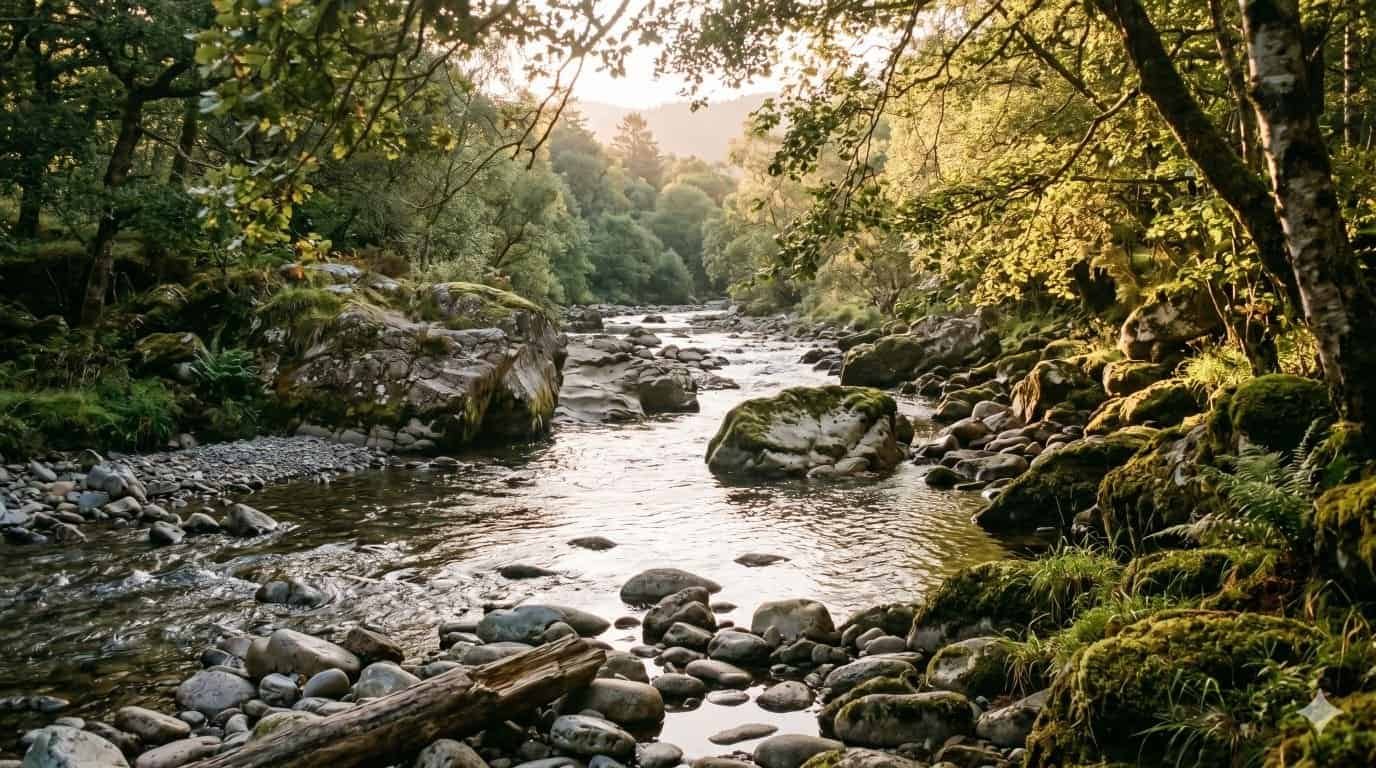
A river cuts through rock, not because of its power, but because of its persistence.
James N. Watkins
Historical Context
Watkins wrote the line in a season of personal exhaustion, reflecting on a writing career that had been long, often unrewarded, and slow to bear visible fruit. He was contemplating the difference between power — the dramatic burst, the headline moment, the overnight success — and persistence — the quiet returning to the same task, day after day, for years and decades. He looked at a river. He thought about how rivers actually work.
Rivers are not strong. A man with a sledgehammer can break more rock in an hour than a stream will move in a year. But the man with the sledgehammer goes home. The river does not. And in time — geological time, kingdom time, the kind of time God seems to prefer — the river carves canyons that no hammer could ever make.
The line is gentle. It is also quietly subversive. It refuses the modern story that significance comes from dramatic moments and visible breakthroughs. It insists, instead, that the deepest changes in the deepest places of the world are made by something slower, smaller, and more faithful than anyone watching at any given moment would guess.
Scripture Cross-Links
Galatians 6:9 — “Let us not be weary in well doing: for in due season we shall reap, if we faint not.”
Hebrews 12:1 — “Let us run with patience the race that is set before us.”
1 Corinthians 15:58 — “Be ye stedfast, unmoveable, always abounding in the work of the Lord, forasmuch as ye know that your labour is not in vain in the Lord.”
James 1:4 — “Let patience have her perfect work, that ye may be perfect and entire, wanting nothing.”
Alma 37:6 — “By small and simple things are great things brought to pass; and small means in many instances doth confound the wise.”
2 Nephi 28:30 — “For behold, thus saith the Lord God: I will give unto the children of men line upon line, precept upon precept, here a little and there a little.”
D&C 64:33 — “Be not weary in well-doing, for ye are laying the foundation of a great work. And out of small things proceedeth that which is great.”
D&C 123:17 — “Let us cheerfully do all things that lie in our power; and then may we stand still, with the utmost assurance, to see the salvation of God, and for his arm to be revealed.”
Reflection
The world tends to admire power. Headlines are written about explosions, not about erosion. Crowds gather for the dramatic gesture, not the quiet repetition. We are, by nature, story-shaped creatures, and stories want crescendos.
But God seems to have built His most important work on a different principle. Continents are shaped by water. Forests are grown one ring per year. Children are raised one bedtime story at a time. A marriage is not built by a single grand gesture; it is built by ten thousand small, mostly invisible kindnesses, none of which makes the news. A faithful life is not assembled in a moment of conversion alone; it is assembled by the next morning’s prayer, and the morning after that, and the morning after that. The Lord’s preferred metaphors are agricultural and architectural — a mustard seed, a leavening of bread, a foundation built upon a rock — because these things take time. They cannot be hurried.
Persistence is not a glamorous virtue. It is rarely felt as virtue at all in the moment. In the moment it usually feels like nothing — like one more day of the same thing, with no visible result. But Alma’s promise stands: by small and simple things are great things brought to pass. The river does not know it is shaping a canyon. It is only being a river. And yet the canyon happens.
Richard’s Personal Reflection
I have practiced internal medicine for thirty-five years. The dramatic cases — the codes, the saves, the rare diagnoses — are the ones I sometimes get to tell stories about. They are not where most of the actual healing in my career has happened. Most of the healing has happened slowly, across many ordinary office visits, with patients I have known for decades, watching their numbers move a little, their habits shift a little, their burdens lift a little, year by year. I rarely see the change in the moment. Sometimes I do not see it for a decade. And then I look up and realize that the woman who could not walk a block when I first met her now walks two miles a day, or that the man who was once hopeless about his disease has quietly become an example of grace to his whole family.
It is the same in the spiritual life. I cannot tell you the day I changed. I can tell you that I am, in places, a different man than I was when I first started kneeling in the morning to pray as a young husband. I did not become that man in a single moment. The river was at work the whole time, slowly cutting through rock I did not even know was there.
Mom and I have learned, the longer we live, that almost nothing important happens fast. The marriages that last, the faiths that hold, the friendships that deepen, the children who turn out well — none of these are built in a season. They are built by showing up. By coming back. By doing the small thing again the next day, even when nothing visible seems to be changing. The river is the model. The hammer is not.
Grandfather’s Counsel
My dear grandchildren, you will live in a world that wants everything to happen quickly. Software updates instantly. Packages arrive next day. News travels around the planet in seconds. The instinct that surrounds you will be that anything worth doing should produce visible results immediately, and that anything not producing visible results immediately is not worth doing.
Resist this. The most important things in your lives — your faith, your character, your marriages, your children, your testimony of the Savior — will not be built by speed. They will be built by persistence. By the quiet returning, day after day, to the same simple acts of faithfulness that did not seem to make any difference yesterday and that will, in time, make all the difference in the world.
Read your scriptures every day, even when nothing seems to land. Pray every day, even when the heavens feel quiet. Forgive again. Apologize again. Try again. Show up again. Love your spouse one more time today than you feel like loving them. Pick up the phone to call the family member you have been avoiding. Do the small right thing in front of you right now, and then tomorrow, do it again.
You will not see the canyon being made. The river never does. But one day — perhaps long after I am gone — you will look up at your life and discover that the person you have become was made by all the days you almost did not bother to keep going. Be the river. Keep flowing. The rock will give way in time. It always does.
A Blessing, Not a BeggarNext →
The Most Worth-While Thing
If this spoke to you, sit a while with